Treating Ear Wax
Why do we have ear wax?
Ear wax is a substance that the ear produces to prevent against infections. The ear wax is slightly acidic which like stomach acid kills bacteria and other organisms. Ear wax is constantly being produced by the ear canal, and specialised cells on the surface of the ear canal transports this ear wax microscopically outside the ear.
Why do ears get blocked with wax?
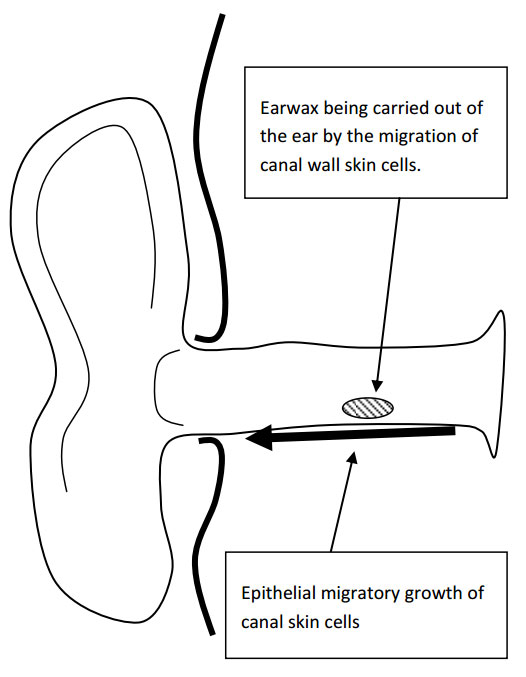 This system works extremely well in most people, however some people have trouble with the transport system of cells in their ear canals and the wax therefore is not transported out. If the transport system is not working the ear wax builds up and makes it harder for the cells to drag the larger mass of ear wax out of the ear.
Infections of the ear canal (also known as swimmer's ear or Otitis Externa), stop these migratory cells from removing wax from the ear. It is important that the ear wax does not build up as it will itself become a source of infection.
Using cotton bud or hair pins scratches these cells off and therefore disrupts these migratory cells as well. Cotton buds actually worsen the problem of ear wax, but many people still try and use them. Many people use cotton buds to actually scratch the ear canal. This is happening because when the cells start growing back after being scrapped off, it itches intensely in the ear canal. This is similar to the itchiness one experiences with a scab on the elbow or knee.
It is therefore extremely important NOT to scratch your ear canals. It makes the itchiness and ear wax worse.
To remove ear wax is extremely easy, but to remove it without causing harm requires care and a delicate approach. Mr Vik Veer, an ENT surgeon London, teaches nurses and other doctors how to remove ear wax correctly and has developed courses to learn this technique properly. He uses a microsuction technique to carefully remove ear wax without damaging the ear drum or canal.
"Mr Veer was excellent! He explained everything clearly in an unhurried and calm manner and really put me at ease whilst telling me what was required." Google Review, 5 stars — Steven Angeli
How do you treat ears blocked with wax?
To avoid ear wax from building up again and causing problems requires more experience and repeated microsuction itself is normally not enough. Mr Vik Veer will be able to explain the treatments available to stop ear wax from becoming a lifelong problem. The vast majority of patients can be treated without surgery.When it comes to treating earwax blockages, it is crucial to avoid the common pitfall of using ear buds (cotton swabs). Although they might seem convenient, ear buds often push earwax further into the ear canal, exacerbating the problem. This practice can interfere with the natural epithelial migration system responsible for transporting earwax out of the ear. Repeated use of ear buds can damage this delicate system, leading to more persistent blockages and potential harm to the ear canal.
Ear drops are a more effective and safer alternative for softening earwax. Among the various options available, sodium bicarbonate and steam distilled water are particularly recommended. These solutions help to break down and dissolve the earwax, making it easier for the ear to expel naturally. In contrast, using olive oil or other oils has been found less effective, and may not produce the desired results in alleviating earwax blockages.
For more stubborn earwax that does not resolve with ear drops, microsuction removal is a highly effective procedure. This method involves using a small, gentle suction device to remove the earwax under the guidance of a specialist. The process is quick, safe, and usually well-tolerated by patients. Microsuction is especially useful when conservative treatments like ear drops have failed to clear the blockage.
In cases where the ear canal is naturally narrow and prone to recurrent blockages, surgical options are available to create more space within the ear canal. These operations aim to widen the canal, reducing the likelihood of future blockages and making it easier for earwax to exit the ear naturally. Consultation with an ENT specialist is essential to determine the most appropriate treatment plan based on individual needs.