Driving with Obstructive Sleep Apnoea
Sleep Apnoea and Driving Safety
The Hidden Danger on Our Roads
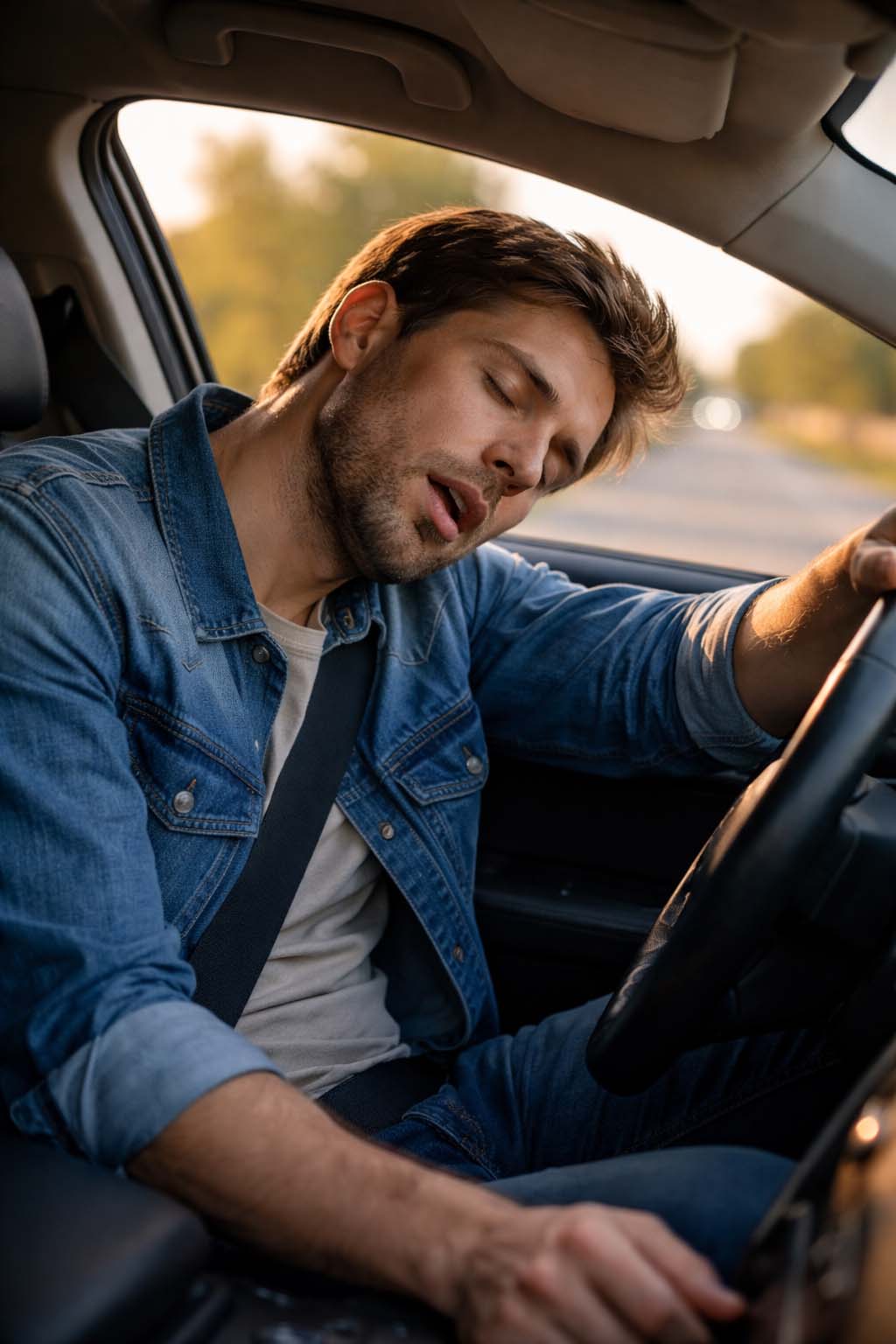
You're alert. You've had your coffee. The road ahead is clear. But if you have untreated sleep apnoea, you're two to three times more likely to crash than someone without the condition. (Tregear et al., 2009; Luzzi et al., 2022)
Here's what makes sleep apnoea particularly dangerous: you often won't feel sleepy even when you're unsafe to drive. Your brain's vigilance, reaction time, and attention are impaired in ways you simply cannot perceive. Research shows that 40% of car accidents in this country involve someone with sleep apnoea. As an obstructive sleep apnoea specialist London, Professor Vik Veer sees many patients whose driving licence is at risk, and early treatment is the most effective way to protect both their safety and their licence.
"Very grateful to have had the opportunity for an initial consultation with Mr Vik Veer. I'm based in the UK and after being bounced around GPs, hospital respiratory clinics, and private medical care I was starting to feel like my options were narrowing and there was no way forward. I had the fortune of seeing Mr Veer — in just over 30 minutes I felt validated, seen, understood and that there were a number of new options, paths and things to explore ahead of me." Google Review, 5 stars — Justin Woods
"After years of getting nowhere fast, I eventually found Dr Veer. This is a turning point in what has been a difficult period. For the first time I felt that someone really understood the issues I'd been having." – Jamie Lewis, Google review
Why "I Don't Feel Tired" Doesn't Mean You're Safe
This is the most dangerous misconception about sleep apnoea and driving. You might feel completely awake and alert, yet still be at serious risk of causing an accident.
Research has found that 17.7% of sleep apnoea patients have objective impaired alertness on proper testing, but report no subjective sleepiness whatsoever. (Tankéré et al., 2024) In another study, one-quarter of people who experienced sleepiness at the wheel had no excessive daytime sleepiness by standard tests. (Fanfulla et al., 2021)
Think of it like drink driving. Someone who's had too much to drink genuinely believes they're fine to drive. They feel alert, in control, capable. But objectively, their reactions are slower, their judgement is impaired, and they're a danger to themselves and others. Sleep apnoea works in exactly the same way.
What Sleep Apnoea Does to Your Driving
Even when you feel wide awake, sleep apnoea causes measurable impairments that directly affect driving safety:
- Slower reaction times - Your brain takes longer to respond to hazards on the road. That split-second delay could be the difference between stopping safely and causing a collision.
- Reduced peripheral vision vigilance - You miss things happening at the edges of your vision. A pedestrian stepping off the kerb, a car pulling out from a side road, a cyclist overtaking. Your brain simply doesn't register them quickly enough. (Tippin et al., 2009)
- Attention lapses and micro-sleeps - These are brief moments where your brain switches off, sometimes for just a fraction of a second. You won't remember them happening, but during that time you're effectively unconscious at the wheel.
- Impaired decision-making - Your ability to judge speeds, distances, and make quick decisions about overtaking or braking is compromised.
- Performance comparable to drunk driving - Simulator studies show that people with untreated sleep apnoea make as many errors as someone driving whilst intoxicated. (Bonsignore et al., 2020; McNicholas, 2016)
The crucial point is that these impairments happen regardless of how awake you think you are.
"I found it impossible to believe that it was normal to feel so tired all the time when I was 'sleeping' for 7-9 hours every night. Mr Veer is one of the most delightful surgeons I have ever met." – Felicity Knapton, Google review
The Numbers: Your Actual Risk
Multiple large-scale studies have confirmed the danger:
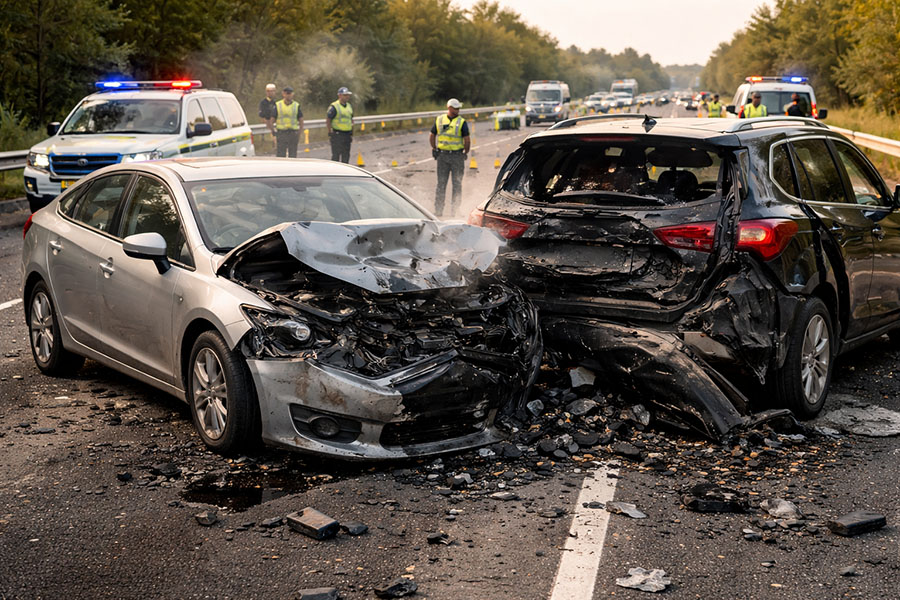
- Two to three times higher crash risk overall - People with sleep apnoea have roughly double or triple the risk of motor vehicle crashes compared to those without the condition. (Tregear et al., 2009; Luzzi et al., 2022)
- Professional drivers particularly at risk - Lorry drivers, taxi drivers, and other professional drivers with OSA have approximately 2.3 times higher risk of accidents and near-misses. (Garbarino et al., 2016)
- Real-world registry data confirms the risk - A Swedish study of CPAP users found a crash risk ratio of 2.45 compared to population controls. A Danish nationwide study found a 29% increase in motor vehicle accidents amongst those with sleep apnoea. (Karimi et al., 2015; Udholm et al., 2022)
- Severity matters, but isn't everything - Higher apnoea-hypopnoea index (AHI) scores and greater sleepiness are associated with more crashes, but even mild sleep apnoea affects driving. Importantly, AHI alone doesn't predict crash risk. You can have what seems like "mild" OSA on paper and still be very unsafe to drive. (Bonsignore et al., 2020; Karimi et al., 2015)
The DVLA Problem: Why the Epworth Score Isn't Enough
The DVLA currently uses the Epworth Sleepiness Scale as one of the markers for determining whether someone with sleep apnoea is safe to drive. In my professional opinion, this is inadequate and potentially dangerous.
The Epworth score only measures subjective sleepiness - how sleepy you feel. It doesn't measure vigilance, attention, or your actual ability to drive safely. As we've seen from the research, many people with sleep apnoea have serious objective impairment without feeling sleepy at all. (Luzzi et al., 2022; Bonsignore et al., 2020)
The European Respiratory Society has stated clearly that the Epworth scale "does not measure vigilance or ability to drive," yet it remains part of the DVLA assessment. (Bonsignore et al., 2020) This means people who score well on the Epworth - who don't feel particularly tired - may still be unsafe drivers, but the current system doesn't identify them.
Furthermore, many OSA drivers under-report symptoms, especially when their driving licence is at stake. When you know that admitting to sleepiness might mean losing your licence and your livelihood, there's an understandable temptation to minimise the problem.
UK Legal Requirements: What You Must Do
If you have sleep apnoea, you have legal obligations under UK law:
DVLA Notification Requirements
You must notify the DVLA if you have obstructive sleep apnoea that causes excessive sleepiness. This is a legal requirement, not optional. The DVLA defines "excessive sleepiness" as sleepiness that has, or is likely to, affect safe driving.
For Group 1 licences (cars and motorcycles), you must inform the DVLA if your sleep apnoea causes excessive sleepiness. For Group 2 licences (lorries, buses, and other large vehicles), you must inform the DVLA about any sleep apnoea diagnosis, regardless of whether you experience sleepiness.
Getting Your Licence Back: DVLA Requirements
If your licence is revoked due to sleep apnoea, the DVLA has specific requirements before they'll return it:
- CPAP treatment pathway - You need to demonstrate three months of CPAP use with good compliance. The DVLA defines "good compliance" as using CPAP for at least 4 hours per night, 70% of the time. Your CPAP machine records this data automatically, and you'll need to provide evidence of your usage.
- Alternative treatment pathway - Alternatively, you need a new sleep study showing an AHI of less than 15. This might apply if you're using a mandibular advancement device (MAD), wearing a positional device that forces you to sleep on your side, or have undergone surgery for your sleep apnoea.
- Ongoing monitoring - Even after your licence is returned, you'll typically need regular reviews to confirm your treatment remains effective.
What Happens If You Don't Declare
Failing to notify the DVLA about a condition that affects your driving is a criminal offence. You could be fined up to £1,000, and if you're involved in an accident, you may face prosecution.
Your insurance will almost certainly be invalid if you haven't declared your condition. This means that if you cause an accident, you could be personally liable for all damages and injuries - potentially hundreds of thousands of pounds.
Professional Drivers
If you hold a Group 2 licence (HGV, bus, taxi), the requirements are stricter. Any diagnosis of sleep apnoea must be reported to the DVLA, and you'll need to demonstrate effective treatment before being allowed to continue driving professionally.
European Regulations
It's worth noting that some European countries have even stricter rules. In certain countries, if you're diagnosed with sleep apnoea and don't use CPAP, your driving licence can be confiscated. Whilst we don't have this system in the UK currently, it demonstrates how seriously other nations take this issue.
"I've been seeing Mr Veer for severe sleep apnoea for approximately 18 months. I am pleased to say I'm off the CPAP machine and breathing and sleeping is again a pleasure at night. Mr Veer has changed my life." – Jeremy Rideout, Google review
The Good News: Treatment Works
Whilst the risks of untreated sleep apnoea are serious, the good news is that effective treatment dramatically reduces your crash risk:
- CPAP reduces crash risk by 70% - Continuous positive airway pressure therapy, when used properly, reduces crash risk by approximately 70%, bringing it back close to normal population levels. (Tregear et al., 2010)
- Real-world crash rates drop dramatically - Registry data shows crash rates falling from 7.6 to 2.5 per 1,000 drivers per year when CPAP is used for at least 4 hours per night. (Karimi et al., 2015)
- Surgery may be even more effective - Some studies suggest that surgical treatment for sleep apnoea may result in even lower motor vehicle accident rates than CPAP alone. (Alkan et al., 2021; Sina et al., 2025)
- Simulator performance improves - Both CPAP and surgical treatment improve driving simulator performance, with fewer lane deviations and better reaction times.
The key message is this: treatment works, but only if you use it consistently. CPAP that sits in the cupboard won't protect you or other road users.
"Dr Veer has helped me over the last few months identify my sleep apnoea. My AHI was 24 prior to using CPAP and 15 after using. After using the techniques he recommended, it has fallen to 1!" – Peter Hurley, Google review
What Should You Do Now?
If you have sleep apnoea, whether diagnosed or suspected:
If You're Already Diagnosed
- Get treated - whether that's CPAP, a mandibular advancement device, surgery, or another option
- Use your treatment every night - partial compliance isn't enough to keep you safe
- Inform the DVLA if your condition causes excessive sleepiness (Group 1) or if you hold a Group 2 licence
- Don't rely on "feeling fine" - your perception of your alertness is unreliable
If You Suspect Sleep Apnoea
- Book a sleep study urgently, especially if you're a professional driver
- Complete our online questionnaires to assess your risk: Sleep Assessment Questionnaires
- Don't wait - the risks to you and others are too great
- Remember that even if you don't feel tired, you could still be unsafe
If You Can't Tolerate CPAP
Many people struggle with CPAP, but that doesn't mean you're out of options. Sleep apnoea treatment without CPAP is a very real possibility for many patients. Prof Vik Veer, a leading snoring surgeon London and sleep apnoea surgery London specialist at the snoring clinic Harley Street, can assess whether you're suitable for alternatives such as:
- Nasal surgery to improve CPAP tolerance
- Palatal procedures
- Tongue base surgery
- Hypoglossal nerve stimulation implants (Inspire or Nyxoah Genio)
- Combination approaches tailored to your specific anatomy
Frequently Asked Questions
I don't feel tired - do I still need to declare to the DVLA?
If you have sleep apnoea that causes or is likely to cause excessive sleepiness that could affect safe driving, yes. However, as we've discussed, "not feeling tired" doesn't mean you're safe. The research shows clearly that objective impairment can exist without subjective sleepiness. If you're unsure, get proper assessment rather than gambling with your safety and that of others.
Will I lose my licence?
Not necessarily. If you're receiving effective treatment and can demonstrate this to the DVLA, you can usually keep your licence. The DVLA is primarily concerned with whether your condition is being properly managed, not with punishing you for having it.
Can I drive whilst waiting for treatment?
This depends on the severity of your condition and whether you experience excessive sleepiness. You should discuss this with your doctor. If you're experiencing significant sleepiness or have been advised by a medical professional that your driving may be impaired, you should not drive until treatment is in place.
What if I can't tolerate CPAP?
CPAP intolerance is common, but it doesn't leave you without options. Surgical treatments, mandibular advancement devices, positional therapy, and other approaches can all be effective. The key is to work with a specialist who understands the full range of treatment options rather than giving up.
Do I need to tell my insurance?
Yes. You must inform your car insurance provider about any medical condition that might affect your driving. Failure to do so could invalidate your insurance, leaving you personally liable in the event of an accident.
What about shift work or long journeys?
Both shift work and long-distance driving increase the risk of accidents for people with sleep apnoea. If your job involves either of these, it's even more critical that you get assessed and treated. The combination of sleep apnoea and disrupted sleep schedules or extended driving is particularly dangerous.
"Having suffered from severe disruptive sleep apnoea, my experience with Mr. Vik Veer has been truly transformative. The results have been nothing short of remarkable. Post-surgery, I've experienced a significant improvement in the quality of my sleep." – Raj Patwal, Google review
"Without a doubt one of the best consultants I have come across. He has extensive knowledge in OSA and takes the time to listen to your issues and explain the best treatment options. His support staff are also very efficient and go out of their way to assist you." Google Review, 5 stars — Perdeep Kaur
Getting Help
Prof Vik Veer provides comprehensive assessment and treatment for sleep apnoea, including home sleep studies, drug-induced sleep endoscopy (DISE) to identify the exact cause of your obstruction, and the full range of surgical and non-surgical treatments.
If you're concerned about sleep apnoea and driving, or if you've been told you need treatment but can't tolerate CPAP, please get in touch:
Private secretary: 0207 458 4584
Email: Secretary@Consultant-Surgeon.co.uk
The Bottom Line
You cannot trust your own judgement about whether you're safe to drive. Sleep apnoea impairs you in ways you won't notice, but other road users will pay the price. The research is unambiguous: untreated sleep apnoea roughly doubles or triples your crash risk, and this happens whether you feel tired or not.
Get assessed. Get treated. Stay safe. The life you save might not be your own.
"Dr Vic Veer absolutely saved my life. I had very obstructive sleep apnoea with serious effects. Mr Veer has changed my life and I can't thank him enough for his expertise and knowledge." – Wesley Burne, Google review