




There is a question I hear regularly in clinic, usually from patients who have already tried several things without much improvement. They have used the nasal spray, they have taken the antibiotics, they have perhaps even had surgery, and yet here they are, still blocked, still producing thick secretions, still not quite right. The question, understandably, is why. Why does this condition seem so resistant to treatment when other infections resolve and move on?
The honest answer is that chronic sinusitis is not one condition. It looks like one condition from the outside, it produces broadly similar symptoms in most people who have it, and for many years it was treated as though it were a single disease requiring a single approach. We now know that this thinking was wrong, and that understanding what type of sinusitis a patient has changes the treatment substantially. This post is intended to explain all of that, including what sinusitis actually is, how acute episodes differ from chronic disease, and what the current evidence tells us about treating each biological subtype correctly.
The Sinuses: What They Are and How They Connect to the Nose
The sinuses are air-filled cavities inside the bones of the face and skull. They are not solid bone throughout, which makes sense when you consider the weight of the head. Each sinus is lined with the same type of mucous membrane that lines the inside of the nose, which means they are constantly producing a small amount of mucus. In normal circumstances, that mucus drains out through small natural openings that connect each sinus to the nasal passages, and you are entirely unaware of this process.
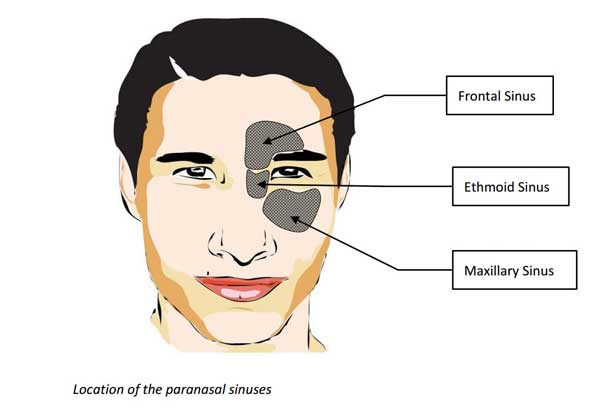
There are four pairs of sinuses. The maxillary sinuses sit within the cheekbones, one on each side, and are the largest. They drain through openings on their upper inner wall, which is anatomically inconvenient because gravity works against drainage and any swelling of the nasal lining can easily block the opening. The ethmoid sinuses are a collection of small air cells sitting between the eye sockets, and they connect the nasal passages to the other sinuses in important ways. The frontal sinuses sit within the bone of the forehead above the eyes and drain downward through a narrow channel. The sphenoid sinus sits deep at the back of the nasal cavity, at roughly the centre of the skull, and when it becomes inflamed and pressurised it produces a distinctive pain at the top of the head or deep behind the eyes that patients often find difficult to place [Fokkens WJ et al. Rhinology. 2020].
All of these sinuses communicate with the nose through small natural openings, and the critical point is that the nasal lining and the sinus lining are essentially one continuous tissue. When the nose becomes inflamed, whether from a cold, from allergy, or from any other cause, the lining swells and those small openings narrow or close entirely. Once a sinus is cut off from drainage, the mucus inside it stagnates. As any clinician knows, stagnant fluid in a closed cavity will eventually become infected. The sinus fills, the pressure builds, and the pain begins.
This anatomy also explains why treatment needs to reach the right places. A nasal steroid spray, however faithfully used, deposits most of its dose in the front of the nasal passage. Getting medication around the turbinates (the scroll-shaped bony shelves inside the nose that warm and filter inhaled air) and through the small drainage channels into the sinuses themselves requires considerably more volume of fluid than a standard spray can deliver. This is a point I will return to in detail later.
Acute Sinusitis: When Sinusitis Strikes Suddenly
Acute sinusitis is the most common presentation, and most people who experience it will do so in the context of a viral upper respiratory infection, meaning an ordinary cold. The viral infection causes the nasal lining to swell, the drainage openings block, and the conditions inside the sinus become favourable for bacterial growth. The result is facial pain or pressure that is often worse when bending forward, nasal congestion, coloured or purulent (thick and pus-like) nasal discharge, and frequently a reduced sense of smell. Some patients develop pain that tracks down into the upper teeth, particularly with maxillary sinusitis, as the roots of the upper molar teeth sit close to the floor of the maxillary sinus [Payne SC et al. Otolaryngol Head Neck Surg. 2025].
It is important to distinguish between viral and bacterial acute sinusitis, because the treatment is different and because prescribing antibiotics for viral sinusitis is not only unhelpful but contributes to antibiotic resistance. The 2025 updated clinical practice guideline from the American Academy of Otolaryngology sets out the diagnostic criteria carefully. Bacterial sinusitis should be suspected when symptoms persist without any improvement for at least ten days beyond the onset of the original cold, or when symptoms initially improve and then worsen again within ten days (sometimes called double worsening). Severe symptoms from the outset, with a high fever and significant facial pain, may also indicate bacterial rather than viral disease [Payne SC et al. Otolaryngol Head Neck Surg. 2025].
The key figure to bear in mind is that only around two per cent of all cases of acute rhinosinusitis are bacterial. The overwhelming majority are viral and will resolve on their own within seven to ten days. This matters because it means that most people presenting with a blocked nose, facial pressure, and coloured discharge after a cold do not need antibiotics and will recover just as quickly without them [Lemiengre MB et al. Cochrane Database Syst Rev. 2018].
In terms of what does help during an acute episode, the most useful combination is a decongestant nasal spray, saline irrigation, and pain relief as needed. The decongestant shrinks the swollen nasal lining around those small drainage openings, allowing the backed-up mucus to begin draining. Decongestant sprays such as xylometazoline are appropriate here, with the important caveat that they should not be used for more than four to five days at a stretch. Beyond that point, the nasal lining can become dependent on them and begins to rebound, causing more swelling when the spray is stopped. Short-term decongestant use in genuine acute sinusitis is one of the few situations where I would actively recommend them.
Saline irrigation with a high-volume squeeze bottle is the second component, and its purpose is mechanical rather than pharmacological. The goal is to flush out infected material and stagnant mucus from the sinus. After the decongestant has opened up the drainage passages, the irrigation fluid can actually reach the sinus cavities in some patients, and it is not unusual to feel very little happening during the rinse itself, only to have a large volume of cloudy fluid emerge from the nose an hour later when the head position changes. This is a good sign, and means the fluid has genuinely entered the sinus and done its job.
When bacterial sinusitis is diagnosed and antibiotics are warranted, the current evidence firmly supports amoxicillin with or without clavulanate as the first choice, taken for five to seven days. There is no meaningful evidence that longer courses produce better outcomes, and the previous guidance recommending ten-day courses has been revised accordingly [Payne SC et al. Otolaryngol Head Neck Surg. 2025]. For patients whose symptoms have persisted for ten days but who are not particularly unwell, the current guidance recommends watchful waiting as the initial strategy rather than immediate prescribing, with a clear plan to start antibiotics if there is no improvement within a further three to five days.
There are warning signs that indicate acute sinusitis is becoming complicated and that urgent medical attention is needed. Swelling or redness around the eye, visual changes, a severe headache that is different from usual, a stiff neck, high fever, or a swelling on the forehead all require same-day assessment. These symptoms may indicate that the infection has spread beyond the sinus into the orbit (the bony socket containing the eye) or, in rare cases, toward the intracranial space. If any of these features develop, the time for home management has passed.
Imaging, in the form of a CT scan or plain X-ray, is not recommended for straightforward acute sinusitis. The diagnosis is clinical, and a scan adds radiation exposure without changing management in the uncomplicated case. Imaging is appropriate when a complication is suspected, when symptoms fail to resolve despite adequate treatment, or when an alternative diagnosis needs to be excluded [Payne SC et al. Otolaryngol Head Neck Surg. 2025].
Acute Recurrent Sinusitis: When It Keeps Returning
A distinct and clinically important group of patients are those who experience repeated discrete episodes of acute sinusitis with complete resolution in between. The formal definition requires four or more episodes in any twelve-month period, each meeting diagnostic criteria for acute bacterial sinusitis [Sharma GK et al. StatPearls. 2024]. In the clinic, I tend to become interested in the pattern well before the fourth episode, because the question of why it keeps happening is usually more informative than the episode count.
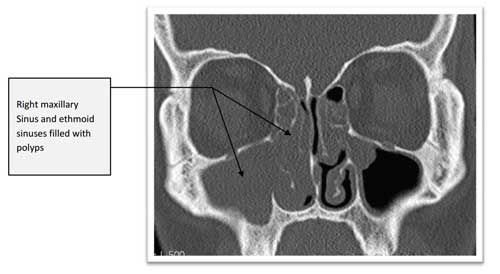
The most common explanation is a structural one. The natural drainage openings of the sinuses are narrow, and in some individuals they are anatomically narrower still, or sit in a position where any degree of nasal swelling during a cold is sufficient to obstruct them. The nasal septum, the central partition dividing the nose into two passages, may deviate to one side and preferentially crowd one drainage channel. Nasal polyps can block drainage pathways even when they are not large enough to cause constant symptoms. Allergic rhinitis is itself a strong risk factor for recurrent sinusitis, since the cyclical inflammatory swelling of allergy sets up the same obstructive conditions that allow stagnation and infection to occur.
The management of acute recurrent sinusitis therefore begins with understanding the underlying reason for the pattern. This typically involves nasal endoscopy (passing a fine camera gently into the nose in clinic, which is a brief and generally well-tolerated procedure) and in many cases a CT scan of the sinuses, not to diagnose an acute episode but to assess the anatomy and look for structural factors that are predisposing to repeated obstruction.
Where allergy is identified as a contributing factor, treating it properly reduces the background level of nasal inflammation and makes the sinuses less vulnerable to each successive cold. This may involve allergen avoidance measures, a regular nasal steroid spray used consistently, and in appropriate cases allergen immunotherapy, in which gradually increasing doses of the relevant allergen are administered over a period of years either as injections or as a tablet dissolved under the tongue daily. Immunotherapy is the only intervention that modifies the allergic response itself rather than simply suppressing its consequences [Durham SR et al. J Allergy Clin Immunol. 2012].
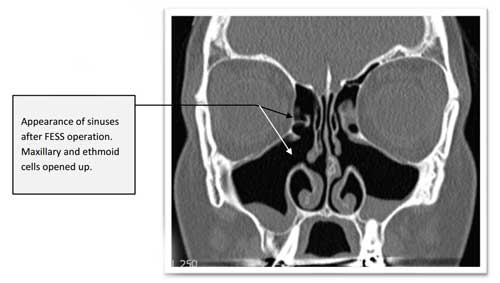
Where structural factors are identified, the question of surgical intervention arises. Functional endoscopic sinus surgery (FESS), performed entirely through the nostrils under general anaesthesia with no external incisions, can widen the natural drainage openings, straighten a deviated septum, and remove obstructing polyps. In patients with a clear anatomical reason for their recurrent episodes, surgery followed by a period of nasal steroid spray and irrigation can break the cycle effectively [Rudmik L et al. JAMA Otolaryngol Head Neck Surg. 2015].
When Sinusitis Becomes Chronic
There is a point at which a sinus problem that seemed acute stops resolving and settles into something more persistent. Chronic sinusitis is defined by inflammation lasting twelve weeks or more, confirmed either on nasal endoscopy or on imaging [Fokkens WJ et al. Rhinology. 2020]. In practice, experienced clinicians often recognise the trajectory earlier than twelve weeks; there is a quality to the disease that is different from the acute pattern, a sense of something that has settled in rather than something that is resolving. The transition matters because the treatment is substantially different, and applying acute sinusitis management to chronic disease produces frustratingly limited results.
The symptoms that point toward chronic sinusitis are nasal blockage, nasal discharge (which may be clear and watery or thick and coloured), facial pressure or pain, and a reduced or absent sense of smell. Not everyone has all four, and their relative prominence varies between patients. That variation, it turns out, is one of several clues as to what type of sinusitis is actually present. To be confident that chronic sinusitis is the correct diagnosis, there should be objective evidence of inflammation on nasal endoscopy or CT scan. Symptoms alone are not sufficient, partly because a number of other conditions can produce an identical picture, including migraine, tension headache, and allergic rhinitis affecting the nasal passages throughout the year [Fokkens WJ et al. Rhinology. 2020].
The Problem with One-Size-Fits-All Treatment
For most of the history of treating this condition, management was guided almost entirely by whether or not nasal polyps were present. Patients with polyps were treated one way, patients without them were treated another way, and that was broadly the framework. The difficulty is that we now understand this framework to be too simple. Patients without nasal polyps can have dramatically different underlying disease processes from one another, and these different processes respond to treatment in different ways.
The shift in thinking has moved toward what is called endotyping. An endotype describes the underlying inflammatory mechanism of a disease, the particular immunological pathway that is driving it, rather than just the outward appearance of the condition. Three main endotypes have now been identified in chronic sinusitis, broadly labelled Type 1, Type 2, and Type 3. This classification system was formalised in the EPOS 2020 international consensus document, a large collaborative guideline produced by over 40 rhinology societies, and understanding which endotype is present guides treatment in a way that the older approach simply could not [Fokkens WJ et al. Rhinology. 2020].
Type 1 Sinusitis: The Classic Presentation
Type 1 sinusitis is driven by a branch of the immune system that is principally concerned with responding to bacteria and viruses. The key cells involved are neutrophils (a type of white blood cell that constitutes the first wave of the body's response to infection) and a group of immune signalling proteins including interferon-gamma and interleukin-12. The inflammation is predominantly neutrophilic, meaning neutrophil-driven.
In clinical terms, this is often the patient who fits the classic picture most people imagine when they think of sinusitis. Thick, discoloured nasal discharge, a sense of pressure behind the cheeks or forehead, nasal blockage, and a tendency toward repeated bacterial infections superimposed on a background of chronic inflammation. The sense of smell is usually relatively preserved. There is typically no history of asthma and no particular allergic tendency. Blood tests show normal or low levels of IgE (a protein produced by the immune system in allergic conditions) and a normal eosinophil count (eosinophils being another type of white blood cell, relevant mainly to Type 2 disease).
Where Type 1 sinusitis has a specific and well-supported treatment option is in the use of low-dose, long-term macrolide antibiotics. Macrolides are a class of antibiotic that includes clarithromycin and roxithromycin. In Type 1 sinusitis their value is not primarily as antibiotics in the conventional sense. At the low doses used over three months, their principal effect is anti-inflammatory: they reduce production of inflammatory signalling proteins, impair the recruitment of neutrophils to the tissue, disrupt bacterial biofilms (a protective coating that bacteria form over mucosal surfaces, making them harder to shift), and appear to stabilise the mucosal lining of the sinuses [Wallwork B et al. Laryngoscope. 2006].
The landmark study, published by Wallwork and colleagues and conducted in Australia, divided patients with chronic sinusitis without polyps into two groups and gave one group roxithromycin at 150 mg daily for twelve weeks and the other group a placebo. The roxithromycin group showed significant improvement in symptoms and quality of life. Crucially, patients with elevated IgE levels showed little benefit, which is an important patient selection point [Wallwork B et al. Laryngoscope. 2006]. In the UK, clarithromycin at 250 mg once daily for twelve weeks is the most practical equivalent. Before starting, a baseline ECG (a heart tracing) is sensible because macrolides can marginally affect cardiac electrical activity in susceptible individuals.
Type 2 Sinusitis: The Eosinophilic Patient
Type 2 sinusitis is driven by a completely different branch of the immune system, one that evolved primarily to deal with parasites and that, in modern Western populations, tends to misbehave in the context of allergy and eosinophilic inflammation. The key signalling proteins here are interleukins 4, 5, and 13, and the dominant immune cells are eosinophils. When eosinophils accumulate in the wrong places and in too great a number, they drive a distinctive pattern of inflammation that is particularly responsive to corticosteroids and, in more severe cases, to biological therapies.
This is by far the most common endotype in Western populations among patients with nasal polyps, accounting for roughly 80 to 90 per cent of that group. But it also accounts for somewhere between 30 and 50 per cent of severe chronic sinusitis patients without polyps, which surprises many people and explains why a substantial minority of patients without visible polyps behave like polyp patients in terms of disease severity and treatment response [Fokkens WJ et al. Rhinology. 2020].
The single most useful clinical pointer toward Type 2 sinusitis is loss of smell. In my experience, a patient who opens the consultation by describing significantly impaired smell, or who mentions that food tastes flat, is considerably more likely to have Type 2 disease than any other endotype. The research supports this: smell loss has been identified as the symptom most consistently associated with the Type 2 inflammatory pattern [Stevens WW et al. J Allergy Clin Immunol Pract. 2019]. Beyond this, the discharge tends to be clear or mucoid rather than frankly purulent, there is commonly a history of asthma (a condition in which the airways of the lungs narrow and become inflamed, causing breathlessness and wheeze), and many of these patients have a background of atopy, meaning a tendency toward allergic conditions such as hay fever or eczema.
Blood tests are helpful here. A raised serum IgE and a raised peripheral eosinophil count above approximately 300 cells per microlitre are useful supporting evidence [Gevaert P et al. Allergy. 2022]. Corticosteroids work very well in this group, which is both the reason these patients often get considerable relief from oral steroid courses and the reason those courses need to be used thoughtfully given the risks of repeated systemic steroid exposure.
For patients with Type 2 sinusitis and nasal polyps that have failed to respond adequately to medical therapy and surgery, biological treatments are now an important option. These are targeted medicines, given by injection, that block specific proteins in the Type 2 inflammatory pathway. Dupilumab blocks the receptors for interleukins 4 and 13. Mepolizumab targets interleukin 5 directly. Omalizumab targets IgE. They are highly effective in the right patients and are approved specifically for polyp disease. Macrolide antibiotics are generally a poor choice in Type 2 disease: prescribing them to a patient with an elevated IgE and raised eosinophils is unlikely to achieve anything meaningful [Wallwork B et al. Laryngoscope. 2006].
Type 3 Sinusitis: The Difficult Case
Type 3 sinusitis is the least common in Western populations but arguably the most challenging to treat. It is characterised by signalling proteins principally including interleukin-17 and interleukin-22, produced by a class of cells called Th17 lymphocytes. The inflammation is again predominantly neutrophilic, but the mechanism differs from Type 1 in ways that have significant clinical consequences. The key clinical feature is steroid resistance: interleukin-17 activates a cascade that recruits large numbers of neutrophils to the mucosal tissue and triggers the release of enzymes that damage the sinus lining, impairing normal clearance and driving further inflammation.
In clinical terms, this patient often has a history of multiple courses of antibiotics with only short-lived benefit, thick and heavy purulent discharge, a pattern of rapid relapse after oral steroids are stopped, and in many cases a history of multiple surgical procedures without durable improvement. There is usually no allergic history, IgE is normal, and eosinophil count is unremarkable. The patient may be older, since neutrophilic disease appears to become more prevalent with advancing age [Fokkens WJ et al. Rhinology. 2020].
The honest message for Type 3 patients is that current treatment options are less satisfying than for the other endotypes, and it is important to be transparent about that. Macrolide antibiotics are a reasonable addition to the standard regimen of irrigation and topical steroids, partly because their anti-neutrophilic mechanism is relevant here, and partly because biofilm disruption is important in a population whose symptoms are driven at least in part by bacterial persistence. Culture-directed antibiotic courses during acute exacerbations are worthwhile, rather than empirical broad-spectrum prescribing. Surgery is appropriate when the anatomy warrants it, but patients should be counselled carefully: elevated interleukin-17 levels in the sinus mucus are associated with a significantly higher risk of requiring revision surgery [Chapurin N et al. Int Forum Allergy Rhinol. 2024].
There are no approved biological therapies for Type 3 sinusitis at present. Anti-interleukin-17 medications are biologically rational candidates, but clinical trials have not yet been completed in this population. This is an area of active research and the picture is likely to change within the next few years.
Steroid Nasal Irrigation: Why It Matters and How to Do It Properly
Regardless of endotype, high-volume steroid nasal irrigation is one of the most practically useful treatments available and, in my view, is substantially underused. Too many patients have been given a nasal steroid spray, shown briefly how to point it and press, and sent on their way without any discussion of whether adequate drug delivery to the sinuses is actually being achieved.
A standard nasal steroid spray delivers roughly a tenth to a fifth of a millilitre of fluid per actuation, and that fluid is deposited mainly in the front of the nasal cavity. A high-volume irrigation, by contrast, delivers 240 millilitres of fluid, which flows through the nasal passages, enters the sinus drainage pathways, and in patients who have had endoscopic sinus surgery, reaches directly into the sinus cavities themselves. The difference in drug delivery is not marginal: in one well-designed study conducted over twelve months, patients who used high-volume steroid irrigation showed significantly better improvement in nasal blockage and endoscopic scores than those using a standard steroid spray delivering the same total dose of drug [Bertazzoni G et al. Eur Arch Otorhinolaryngol. 2025].
The preparation is simple. The standard device is a NeilMed Sinus Rinse squeeze bottle, which holds 240 millilitres. The patient fills it with previously boiled and cooled water (or distilled water), adds a NeilMed saline sachet to achieve the correct salt concentration, and then adds the steroid. The steroid of choice, supported by the most robust safety data, is budesonide (sold under the brand name Pulmicort as a nebuliser suspension for asthma). The vials come as 0.5 milligrams in 2 millilitres of suspension. One vial is added for standard use, or two vials (1 mg total) for patients with more severe disease or for those who have had sinus surgery. Budesonide does not dissolve completely in water but disperses as a suspension, so the bottle must be shaken vigorously immediately before use. The solution should be prepared fresh each day.
The evidence on long-term safety is reassuring and now quite substantial. A study published in 2016 followed 35 patients who had been using budesonide irrigation at a dose of 1 milligram twice daily for an average of 38 months. All patients had normal morning cortisol levels, and formal testing of the adrenal glands (which produce the body's own cortisol, and which can be suppressed by prolonged steroid use) showed no evidence of suppression [Smith KA et al. Int Forum Allergy Rhinol. 2016]. A 2025 meta-analysis pooling data from 26 studies and over 1,400 patients confirmed that budesonide nasal irrigation was associated with improved symptom scores and endoscopic outcomes, with intraocular pressure and cortisol levels remaining normal throughout [Magboul N et al. Rhinology. 2025].
The one caveat worth noting is that patients simultaneously using a steroid nasal spray, a steroid inhaler for asthma, and a steroid irrigation may accumulate a total steroid load that is sufficient to cause adrenal effects [Soudry E et al. Int Forum Allergy Rhinol. 2016]. In practice, if a patient moves to high-volume steroid irrigation, I generally suggest discontinuing the standard nasal spray rather than adding the irrigation on top of it, since the irrigation renders the spray largely redundant. The recommended frequency is once daily for standard use, stepping up to twice daily after sinus surgery or in poorly controlled disease.
Putting It Together
The clinical message of all of this is that before reaching for a treatment, it is worth thinking about which biological process is actually driving the disease. In routine outpatient practice, this does not require a laboratory or a research biopsy. A careful history, a blood eosinophil count, a serum IgE level, and a thoughtful assessment of smell loss and atopic history will take most patients to the right endotype without great difficulty.
For acute sinusitis, the vast majority of episodes are viral and will resolve with nasal decongestant, saline irrigation, and analgesia. Antibiotics, when they are indicated, mean amoxicillin with or without clavulanate for five to seven days. Imaging is not needed for the uncomplicated case. For acute recurrent sinusitis, the question is always why it keeps happening, and the answer usually lies in anatomy, allergy, or the combination of the two.
For chronic sinusitis: Type 1 is neutrophilic, normal IgE, preserved smell, no atopy, and the patient who responds to low-dose long-term macrolides. Type 2 is eosinophilic, elevated IgE or eosinophils, smell loss, often asthma or allergy, and the patient in whom steroids work well, macrolides do not, and in whom biological therapy may eventually become relevant. Type 3 is neutrophilic, normal IgE, heavy purulent disease, steroid-resistant, and the most difficult group to treat with current tools. All three groups benefit from high-volume steroid nasal irrigation used correctly, from adequate sinus drainage whether achieved medically or surgically, and from a treatment plan built around their specific disease rather than a generic sinusitis protocol.
If you have come here from the video, I hope the detail here fills in the gaps that a video format cannot accommodate. The next step, if you have persistent symptoms that are not responding to standard treatment, is to be assessed by someone who is thinking in these terms, because the difference between the right treatment and the wrong one in chronic sinusitis is not a small thing.
References
[1] Fokkens WJ, Lund VJ, Hopkins C, et al. European Position Paper on Rhinosinusitis and Nasal Polyps 2020. Rhinology. 2020;58(Suppl S29):1-464.
[2] Payne SC, McKenna M, Buckley J, et al. Clinical practice guideline: adult sinusitis update. Otolaryngol Head Neck Surg. 2025. doi:10.1002/ohn.1344.
[3] Wallwork B, Coman W, Mackay-Sim A, Greiff L, Cervin A. A double-blind, randomized, placebo-controlled trial of macrolide in the treatment of chronic rhinosinusitis. Laryngoscope. 2006;116(2):189-193.
[4] Stevens WW, Peters AT, Tan BK, et al. Associations between inflammatory endotypes and clinical presentations in chronic rhinosinusitis. J Allergy Clin Immunol Pract. 2019;7(8):2812-2820.
[5] Gevaert P, Bachert C, Hox V, et al. EUFOREA expert board meeting on uncontrolled severe chronic rhinosinusitis with nasal polyps. Allergy. 2022;77(3):689-693.
[6] Fokkens WJ, Lund V, Bachert C, et al. EUFOREA consensus on biologics for CRSwNP with or without asthma. Allergy. 2023;78(3):593-615.
[7] Smith KA, et al. Adrenal insufficiency and budesonide nasal irrigations: a prospective cohort study. Int Forum Allergy Rhinol. 2016;6(10):1076-1081.
[8] Magboul N, Mace JC, Rudmik L, Smith TL. Safety of budesonide nasal irrigations: a systematic review and meta-analysis. Rhinology. 2025. doi:10.4193/Rhin24.312.
[9] Soudry E, Wang J, Vaezeafshar R, Katznelson L, Hwang PH. Safety analysis of long-term budesonide nasal irrigations in patients with chronic rhinosinusitis post endoscopic sinus surgery. Int Forum Allergy Rhinol. 2016;6(6):568-572.
[10] Bertazzoni G, et al. High-volume budesonide irrigation versus budesonide spray in chronic rhinosinusitis management after FESS. Eur Arch Otorhinolaryngol. 2025. doi:10.1007/s00405-025-08912-8.
[11] Chapurin N, Wise SK, Rowan NR, et al. Elevated sinonasal mucosal IL-17A expression is associated with revision endoscopic sinus surgery. Int Forum Allergy Rhinol. 2024;14(1):83-92.
[12] Durham SR et al. Long-term clinical efficacy of grass-pollen immunotherapy. J Allergy Clin Immunol. 2012.
[13] Rudmik L, Soler ZM, Mace JC, et al. Using preoperative SNOT-22 score to inform patient selection for endoscopic sinus surgery. JAMA Otolaryngol Head Neck Surg. 2015;141(4):297-301.
[14] Lemiengre MB, van Driel ML, Merenstein D, et al. Antibiotics for acute rhinosinusitis in adults. Cochrane Database Syst Rev. 2018;9:CD006089.
[15] Sharma GK, Lofgren DH, Hohman MH, Taliaferro HG. Recurrent Acute Rhinosinusitis. StatPearls. Updated 2024.
